Water Leak While Away From Home in Marietta: Shut-Offs, Sensors & Coming Home to Water
A water leak while away from home can run for days before anyone notices — and in Marietta's humidity, that turns a small drip into soaked floors, swollen cabinets, and mold. Learn the shut-offs, sensors, and checks that protect your home while you're gone, and exactly what to do if you come back to water.
Quick Answer
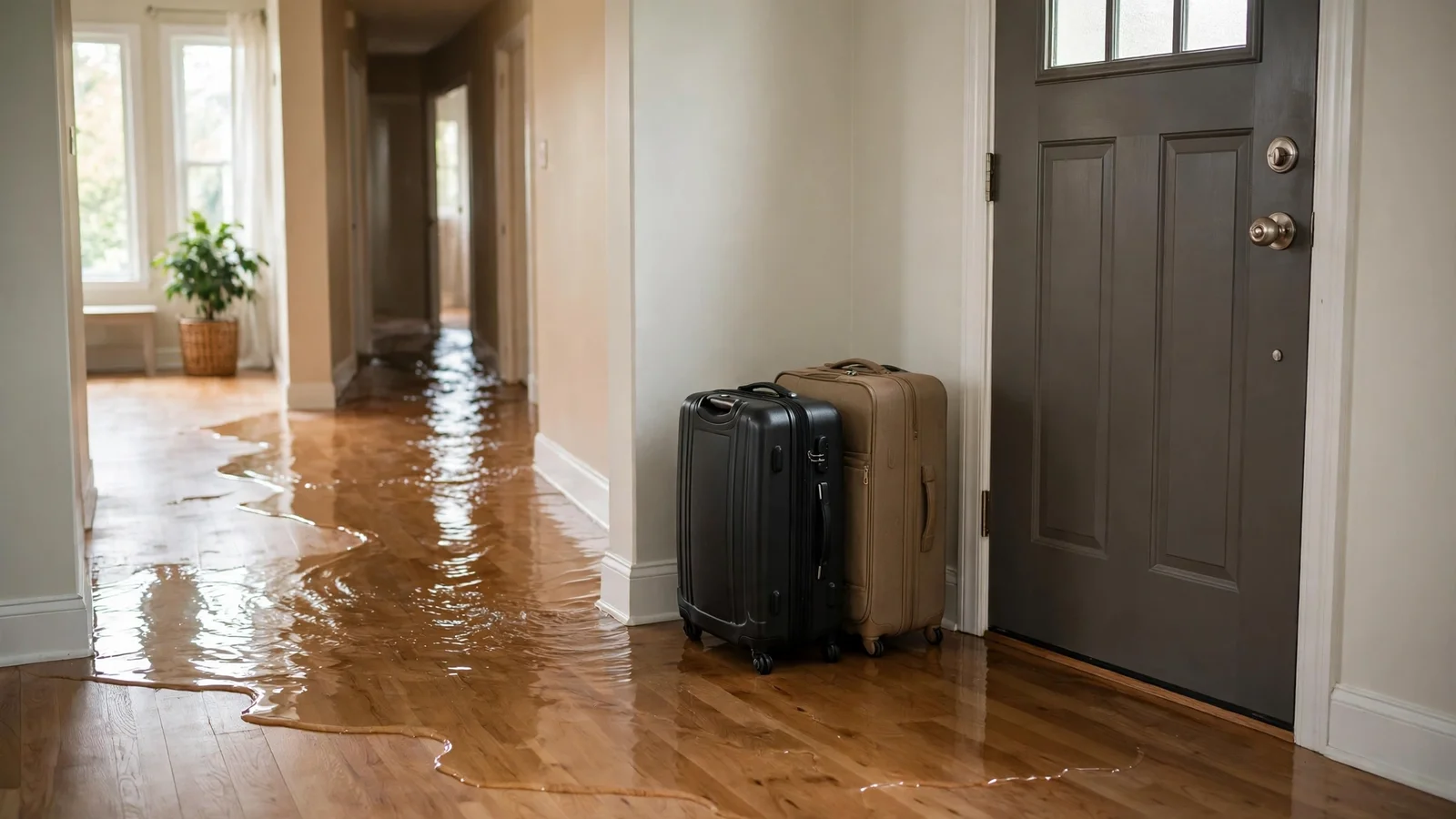
A water leak while away from home can run for days before anyone notices. Before a trip, shut off the main water valve and place leak sensors near the water heater, washer, and sinks. If you come home to water, shut off the main valve and call for emergency help at +1 (470) 804-0012.
You lock the front door, set the alarm, and head out for a weekend in the mountains or a week visiting family. While you're gone, a supply line under a bathroom sink splits, a washing machine hose lets go, or a water heater starts seeping. Nobody is there to hear it or see the first puddle. By the time you walk back in, water has been running for days — soaking through subfloors and wicking up drywall.
Facing a leak right now? Call +1 (470) 804-0012 for emergency response in the Marietta area.
Why a Leak While You're Away Is So Much Worse
Time is the multiplier. A failed supply line can release several gallons an hour — hundreds over a long weekend, more than enough to saturate hardwood, swell cabinets, and soak crawlspace insulation. Marietta's housing stock makes the damage harder to spot and slower to dry:
- Slab foundations. Many Marietta homes sit on concrete slabs. A leak under a slab or inside a slab-adjacent wall can spread under flooring for days with no visible puddle until the floor starts to buckle.
- Crawlspaces. Elevated and older homes often have crawlspaces where a leaking pipe can pool unseen, feeding mold in a dark, humid space that rarely gets checked.
- Attics. Water lines and HVAC condensate drains run through attics in many single-story ranch homes across Cobb County. A leak up there drips down through ceilings, and the first sign is often a stain — days after the leak started.
- Georgia humidity. Even after the water stops, damp drywall and wood dry slowly in our climate. Mold can begin growing on wet materials within 24–48 hours, and an empty, closed-up house is an ideal environment for it.
Before You Leave: The Shut-Off Checklist
The single most effective thing you can do before a trip is to shut off water before vacation — stopping it at the source. Work through this list the day before you leave:
- Shut off the main water valve. This is the gold standard for any trip longer than a day or two. In most Marietta homes the main valve is near the water meter, in the garage on the wall facing the street, or in a utility closet. Turn it clockwise until it stops, then open a faucet to confirm the water is off and relieve pressure. A closed main valve means a failed supply line has nothing to feed it.
- If you can't shut off the main, close the big-risk valves. At minimum, turn off the washing machine supply valves (hot and cold) and the ice-maker line behind the refrigerator. Washer hoses and ice-maker lines are among the most common sources of leaks in an empty house.
- Turn the water heater to vacation mode — or off. With the main valve closed, a water heater can still hold 40–50 gallons. Set it to vacation mode if it has one, or switch it off at the breaker. If you're shutting the main and the heater is older, consider draining it. (See our guide to water heater leak warning signs.)
- Check the dishwasher and sinks. Make sure the dishwasher is empty and its cycle is finished, and look under kitchen and bathroom sinks for any slow drip or damp spot before you leave. A drip you ignore on Friday becomes a soaked cabinet by Monday.
- Secure outdoor water. Disconnect garden hoses and shut off exterior spigots, especially in winter. A cracked hose bib can leak against the house wall for days unnoticed.
- Leave the heat or air conditioning on. In winter, never set the thermostat below 55°F — a cold house invites frozen pipes. In summer, leave the air conditioning running at a moderate setting so humidity stays controlled.
Water Leak Detectors, Sensors and Automatic Shut-Offs: Your Eyes While You're Gone
A shut-off valve protects you when you remember to use it. Sensors protect you when you forget — or when the leak starts somewhere you didn't expect. A well-placed water leak detector turns an empty house into a monitored one:
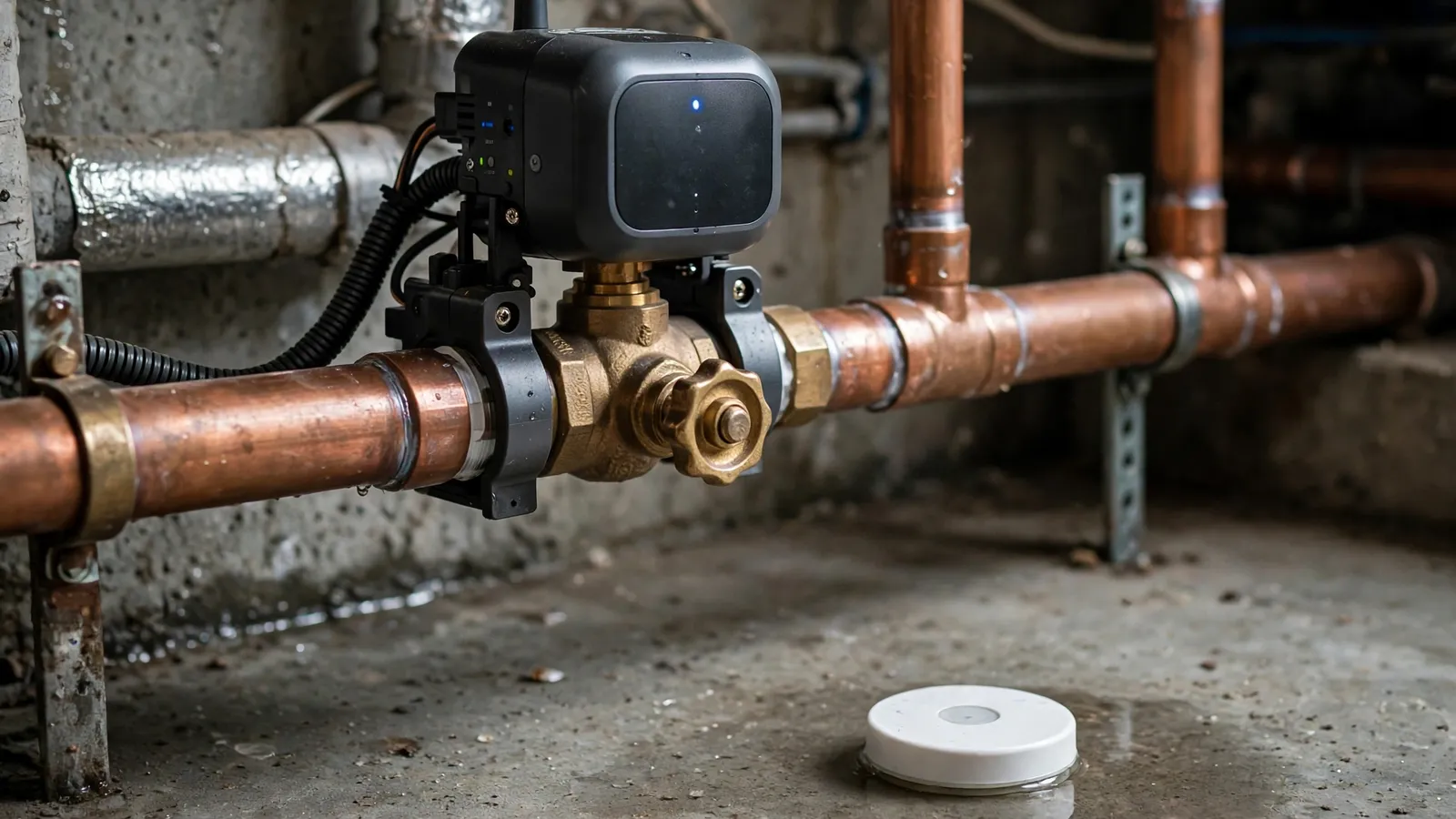
- Water leak sensors (puck-style). Small battery-powered sensors placed on the floor near the water heater, under sinks, behind the washing machine, and near the refrigerator water line. When water touches the sensor, it sounds an alarm and sends an alert to your phone. Place one at every spot where water lines meet an appliance.
- Automatic shut-off valves. These sit on your main water line and close it the moment a sensor detects water — or when the system notices continuous flow that looks like a leak. The water stops itself within minutes, whether you're in Marietta or across the country.
- Flow monitors. A monitor on the main line learns your home's normal water use and flags anything unusual — a toilet running for hours, a line flowing at 3 a.m. Paired with a shut-off valve, it can stop the flow.
- Smart thermostat and humidity alerts. A sudden humidity spike in a closed house is often the first sign of hidden water. Some thermostats and standalone humidity sensors can alert you when indoor humidity jumps out of its normal range.
A sensor is only useful if someone can act on the alert — if you'll have poor coverage, make sure a trusted person back in Marietta also gets it.
Arrange a House Check While You're Away
Technology helps, but a person walking through the house beats any sensor. Ask a trusted neighbor, friend, or family member to check the house every day or two while you're gone:
- Walk every room and look at the floors. Wet spots, buckling, or a dark stain on a ceiling are the first visible signs.
- Check under sinks and around the water heater. A quick look and a hand on the floor is enough.
- Listen. A hissing pipe or a running toilet in a quiet house stands out immediately.
- Know where the main shut-off is. Show them before you leave, and leave the number for emergency water damage help on the fridge: +1 (470) 804-0012.
If you travel often, a regular house-check arrangement is worth more than any single gadget. Combine a weekly check with sensors — the sensors catch it fast, the person confirms it and shuts things down.
Coming Home to Water: What to Do First
You open the door and smell dampness, or your shoes hit wet carpet. Stay calm and work in this order:
- Don't step into standing water near electricity. If water is near outlets, the breaker panel, or appliances, stay out of it. Turn off power to the affected area at the breaker if you can do so safely from a dry spot. Never touch a submerged appliance or a wet outlet.
- Shut off the main water valve. Stop the source before you do anything else. If the leak is clearly from one appliance — a washer hose, an ice-maker line — close that valve too.
- Find the source if it's obvious. A split washer hose, a leaking water heater, a burst supply line under a sink. Don't tear into walls or ceilings.
- Move valuables out of the water. Lift furniture onto blocks, move rugs, electronics, and papers to a dry room. Water spreads fast through carpet and padding.
- Document everything. Take photos and short videos of the water, the source, wet walls, floors, and belongings — before you move anything. Note the time you arrived home; your insurance adjuster will want this record. (See our Georgia homeowners insurance guide for what adjusters look for.)
- Call for emergency help: +1 (470) 804-0012. Professional water extraction in the first hours keeps a bad day from becoming a weeks-long restoration. Standing water that sits — even for another day — soaks deeper into subflooring and drywall and starts the mold clock. For a step-by-step picture of what happens next, see our guide to the water damage restoration process.
Do not wait to "see if it dries." Water trapped inside walls, under flooring, and in a crawlspace doesn't dry on its own in Georgia's humidity — it wicks deeper and starts growing mold within 24–48 hours.
If the water smells foul or looks dark, it may be sewage — a Category 3 contamination. Don't touch it or try to clean it yourself, and keep children and pets out of the area. Our guide to water damage categories and classes explains why that distinction matters.
Frequently Asked Questions
Should I shut off my main water valve every time I leave town?
For any trip longer than a day or two, yes — a closed main valve starves any failed supply line. For one night away, closing the washing machine valves and ice-maker line covers the most common failure points.
Where is the main water shut-off valve in a typical Marietta home?
Common spots: near the water meter at the street (in a ground box), inside the garage on the wall facing the street, or in a utility closet. Check your home inspection report if you can't find yours — and test that it turns before you need it.
Do leak sensors really help if I'm on vacation?
Yes — as long as someone can act on the alert. A sensor near the water heater or washing machine can catch a leak within minutes. Pair sensors with an automatic shut-off valve, and make sure a trusted person in Marietta also receives the alerts when you're unreachable.
How long can a leak run before it causes serious damage?
Serious damage can start within hours. A supply line can release several gallons an hour, and drywall, subflooring, and cabinets absorb water quickly. Over a weekend, the same leak can soak through floors and ceilings and start mold growth.
Will homeowners insurance cover water damage discovered after a trip?
Sudden and accidental water damage — a burst supply line, a failed washer hose — is typically covered under standard Georgia homeowners policies, even if you discover it days later. Damage from a slow leak that ran for weeks, or from neglected maintenance, is usually excluded.
What should I check first when I get home from a trip?
Walk every room and look at floors and ceilings before you unpack. Check under sinks, around the water heater and washing machine, and listen for running water in a quiet house.
Sources & References
- Institute of Inspection, Cleaning and Restoration Certification (IICRC) — S500 Standard for Professional Water Damage Restoration.
- U.S. Environmental Protection Agency (EPA) — Mold Course: mold growth timelines and indoor humidity guidance.
- Insurance Institute for Business & Home Safety (IBHS) — water damage prevention and shut-off valve research.
Come home to water in your Marietta home?
Don't wait for it to spread. Call us for fast extraction, thorough drying, and a clear next step for your Marietta home.
Call +1 (470) 804-0012Complementary Restoration Services
Explore additional specialized water damage, sewage, pipe repair, and flood cleanup services in Marietta.
Water Damage Restoration
Professional water damage cleanup, water extraction, structural drying, and damage restoration for homes, apartments, and commercial properties in Marietta and Cobb County.
Burst & Leaking Pipe Repair
Water extraction, wall & ceiling moisture detection, structural drying, and water damage cleanup after burst or leaking pipes in Marietta.
Basement Water Removal
Standing-water removal and extraction, slab dehumidification, finished basement drying, and moisture remediation after heavy rain, sump pump failures, or plumbing bursts in Marietta.
Need Water Damage Restoration in Marietta?
Call now to discuss your water damage situation and the next steps.